A 15-yard roll-off container holds approximately 6 standard pickup truck loads of debris, making it the strategic choice for residential kitchen demolitions, multirunning carpet pulls, and single-layer architectural…
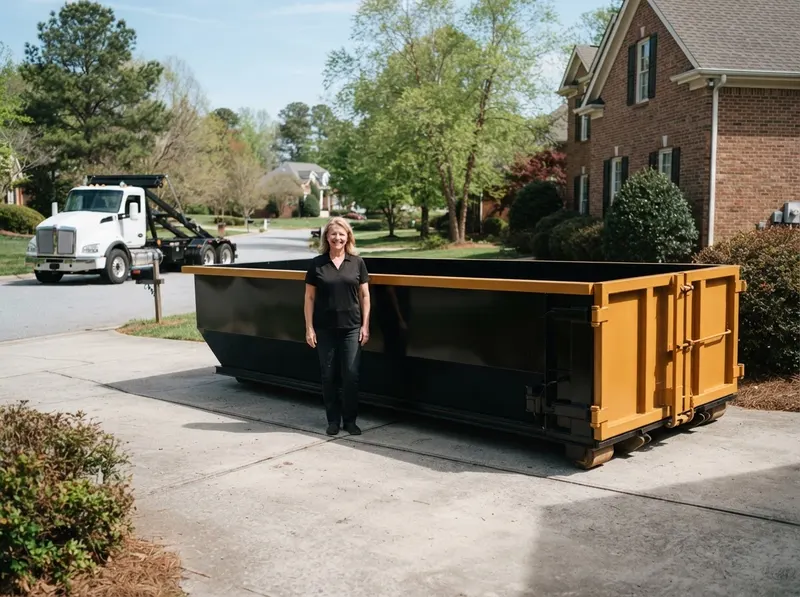
A 15-yard roll-off container holds approximately 6 standard pickup truck loads of debris, making it the strategic choice for residential kitchen demolitions, multirunning carpet pulls, and single-layer architectural roof replacements up to 30 squares. It solves the driveway footprint limitation common in historic neighborhoods like Dilworth, Elizabeth, and Plaza Midwood, where narrow setbacks and steep asphalt grades make larger 30-yard or 40-yard commercial boxes impossible to place without obstructing sidewalk right-of-ways. While a 10-yard bin carries a flat fee of $595, it often overflows during comprehensive bath overhauls; the 15-yard dumpster at $650 provides 50% more volumetric clearance for an additional $55, eliminating the operational downtime of ordering mid-project swaps.
Placement operations across Charlotte utilize structural wood runners placed under the rear steel rollers to prevent surface fractures on decorative aggregate, pavers, and residential asphalt. Ground placement must comply with local municipal municipal storage parameters defined by Charlotte Department of Transportation guidelines, which mandate that containers rest entirely on private property unless an encroachment permit is secured for designated curb space. Jobsites in dense corridors like South End or NoDa require a minimum clearance of 60 linear feet in front of the drop zone and 14 feet of vertical clearance beneath low-hanging oak limbs and utility lines to facilitate safe roll-off hoist operations.
Material handling inside the roll-off bin is governed by environmental standards set by the U.S. Environmental Protection Agency and state mandates managed under the North Carolina Department of Environmental Quality. Standard municipal waste stream processing follows regional parameters maintained by Mecklenburg County Solid Waste, which prohibits wet paints, vehicle batteries, uncertified asbestos materials, and chemical solvents from mixed-debris roll-offs. Construction contractors managing active renovations must also adhere to jobsite debris safety practices outlined by the Occupational Safety and Health Administration to keep public access pathways clear of protruding nails, shattered masonry, and unsecured structural materials.
To manage specialized components responsibly during estate overhauls or structural renovations, operators should consult Earth911 for sorting bulk consumer items, while regional recovery can be coordinated using resources from the Carolina Recycling Association. Structural lumber and salvageable architectural fixtures can be redirected in alignment with the Build Reuse national directory. Hauling practices strictly follow transit compliance protocols regulated by the Federal Motor Carrier Safety Administration and industrial equipment benchmarks established through the National Waste & Recycling Association to guarantee legal axle-weight distributions and safe transport across Interstate 77 and Interstate 485 corridors.
Every job gets a firm, written price after a free on-site visit.
For standards, safe disposal, and service guidance on DUMPSTER in Charlotte, NC, useful references include U.S. EPA, EPA, EPA, OSHA, Earth911, and Google Maps. General consumer and small-business resources are available from USA.gov, Better Business Bureau, FTC Consumer Advice, U.S. Small Business Administration, and Ready.gov.
Tell us about your 15-yard dumpster job in Charlotte and we'll send a clear, written quote, usually the same day.
 SwiftStone Hauling Co.